Every winter, northern India is enveloped in a thick blanket of smog, much of it linked to crop residue burning in agricultural states. Despite years of government bans, incentives, and satellite-based monitoring, farm fires continue to plague air quality. A growing challenge for authorities is the so-called “5 PM trick” — a pattern where stubble burning is timed to avoid detection by satellite systems, allowing some farmers to bypass enforcement mechanisms.
Understanding Satellite-Based Farm Fire Monitoring
India relies heavily on satellite imagery to track agricultural fires across vast rural landscapes. These systems detect thermal anomalies — sudden heat signatures that indicate burning — and relay data to state governments for enforcement action, penalties, or advisories.
However, most satellite systems pass over a given region only at specific times of the day. While the technology is effective in identifying large, sustained fires, it has limitations when fires are short-lived, low-intensity, or timed outside satellite observation windows. This technical constraint has unintentionally created a loophole.
bringsyoustyle.com | websitereviewer.org | CryptoCheaps.com
SoundsLikeThis.net | ipcsections.com
What Is the ‘5 PM Trick’?
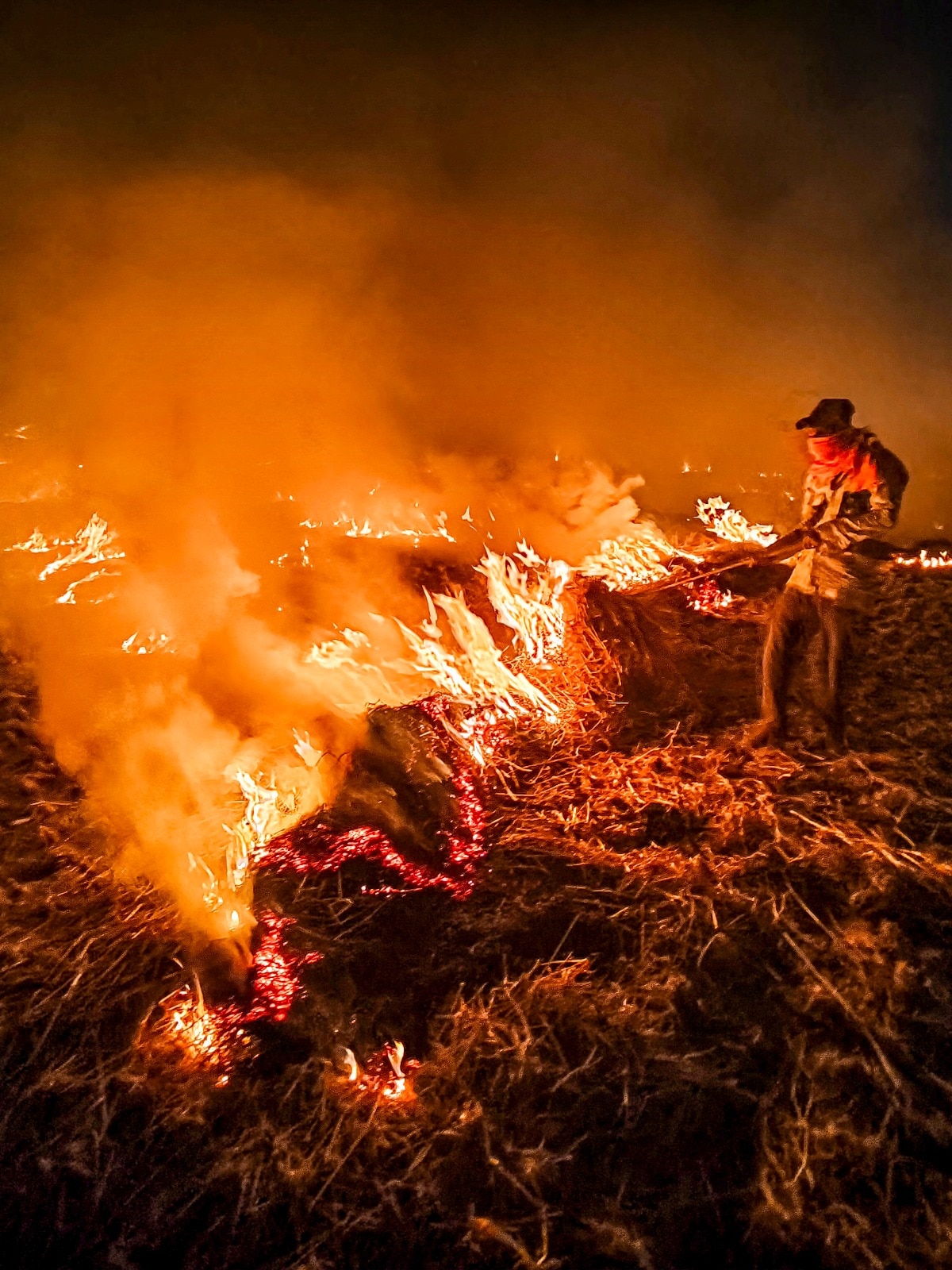
The term “5 PM trick” refers to the practice of burning crop residue in the late evening, often after sunset, when satellite visibility and thermal contrast are reduced. At that time, cooling temperatures, shorter burn durations, and limited satellite passes make detection more difficult.
Officials and environmental researchers have observed that many fire incidents now occur in narrow time windows rather than throughout the day, suggesting deliberate timing rather than coincidence. While not all such fires escape detection, enough do to significantly weaken enforcement efforts.
Why Farmers Resort to Such Measures
The persistence of stubble burning — and attempts to evade detection — reflects deeper structural challenges in agriculture rather than mere defiance of the law.
Farmers face tight sowing deadlines between harvesting rice and planting wheat. Mechanical alternatives to residue burning are often expensive, unavailable, or impractical for small landholders. In many regions, subsidies or shared machinery fail to meet demand, leaving farmers with few viable options.
When penalties are imposed without adequate support, resentment builds. For some farmers, avoiding detection becomes a way to manage economic survival rather than an attempt to undermine environmental goals.
Impact on Air Quality and Public Health
The consequences of undetected farm fires are severe. Even a single evening of widespread burning can significantly raise particulate matter levels, especially when weather conditions trap pollutants near the ground.
Cities downwind experience spikes in respiratory illnesses, school closures, and public health emergencies. Because satellite data informs real-time air quality forecasting, missed detections also weaken early-warning systems designed to protect vulnerable populations.
Thus, the “5 PM trick” does not merely affect enforcement statistics — it has direct implications for public health and environmental governance.
Government Response and Policy Gaps
Authorities have acknowledged the limitations of satellite-only monitoring. Some states are supplementing satellite data with drones, ground patrols, and local reporting mechanisms. However, scaling these solutions across millions of hectares is resource-intensive.
Critics argue that enforcement-heavy approaches have overshadowed the need for long-term solutions. Punitive measures, such as fines or withdrawal of subsidies, may discourage compliance if farmers perceive them as unfair or unworkable.
Experts increasingly emphasize that technology alone cannot solve the problem unless paired with economic incentives, accessible alternatives, and trust-building at the grassroots level.
The Technology vs. Reality Divide
Satellite surveillance was designed as a transparency and accountability tool, not a substitute for on-ground engagement. As farmers adapt their behavior to the known limits of monitoring systems, authorities are forced into a reactive cycle of technological upgrades.
This highlights a broader issue in environmental governance: when policy relies too heavily on remote sensing without addressing ground realities, compliance often becomes performative rather than genuine.
Towards Sustainable Solutions
Environmental experts suggest a multi-pronged approach. Improving access to affordable residue management equipment, encouraging crop diversification, and aligning procurement policies with sustainable practices could reduce dependence on burning.
Equally important is improving monitoring technology to cover more frequent time windows and integrating it with local-level verification rather than relying on satellites alone.
Ultimately, meaningful progress will depend on collaboration rather than confrontation — aligning environmental goals with farmers’ economic realities.
Conclusion
The emergence of the “5 PM trick” underscores the complexity of tackling farm fires in India. While it exposes gaps in satellite monitoring, it also reflects deeper systemic pressures within agriculture. Addressing the issue requires more than better surveillance; it demands policy coherence, farmer support, and sustainable alternatives. Without these, technological fixes will continue to be outpaced by human adaptation, and the cycle of pollution will persist.