Just a day after a powerful blast rocked Delhi, the Supreme Court of India sent out a strong message on terrorism by denying bail to a terror accused, reaffirming its stance on national security and the country’s zero-tolerance approach to extremism.
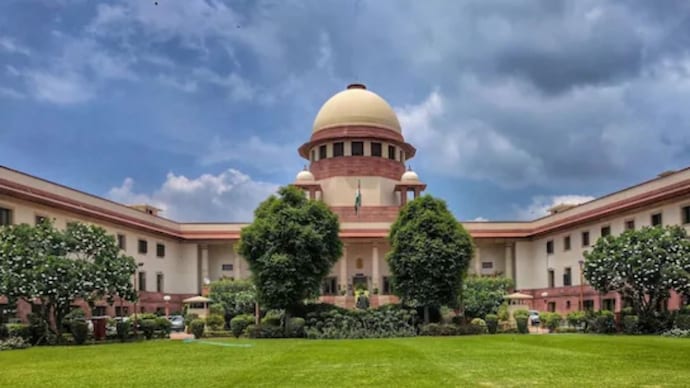
The bench, comprising Justice Bela M. Trivedi and Justice Pankaj Mithal, observed that the material recovered from the accused suggested links to extremist ideology, despite the defence’s claim that the seized material was only “Islamic literature.” The court ruled that such evidence cannot be dismissed at this stage of investigation.
Background of the Case
The accused, identified as Mohammed Faizal (name changed for legal reasons), was arrested under the Unlawful Activities (Prevention) Act (UAPA) on suspicion of being part of a radical online network that allegedly promoted extremist ideologies.
According to the National Investigation Agency (NIA), the accused was a member of a WhatsApp group where participants shared content associated with the Islamic State (ISIS). The group’s display picture reportedly carried a black flag similar to the ISIS emblem, raising red flags for security agencies.
The NIA alleged that the accused and others were involved in circulating radical content, recruiting sympathizers, and discussing potential terror-linked activities online.
The defence argued that no weapons, explosives, or direct evidence of violent intent were found during the investigation. They maintained that the accused was being targeted merely for possessing religious literature, which they said should not be treated as evidence of terrorism.
Supreme Court’s Observation
Rejecting the bail plea, the Supreme Court emphasized that courts must exercise caution in cases involving national security and terrorism. The bench said that while individual rights are important, national security cannot be compromised when there are credible indications of extremist affiliations.
“The accused was part of a WhatsApp group whose display picture was identical to the flag used by the Islamic State. This cannot be ignored merely as coincidence,” the court observed.
The judges noted that even though the defence described the seized material as “Islamic literature,” the context and communication pattern of the accused within the group indicated a deeper level of engagement.
“At this stage, it cannot be said that the seized content is harmless or irrelevant. The nature of the communication and the timing of certain exchanges raise serious questions,” the bench added.
mallorcavipcare.com | updateonsports.com | crankytravel.com
websitesforbetting.com | PiratesGab.com
Timing of the Verdict
The verdict comes just a day after a deadly explosion in Delhi, which left several people injured and triggered widespread fear in the national capital.
While the Supreme Court made no direct reference to the blast in its judgment, legal experts believe the timing of the ruling sends a strong institutional message — that the judiciary stands firm against any form of terrorism and will not extend leniency in cases that pose a threat to public safety.
Security officials noted that the decision reinforces a zero-tolerance approach amid increasing concerns about online radicalization, particularly through encrypted platforms such as WhatsApp, Telegram, and Signal.
What the Court Said on National Security and Rights
The bench reiterated that freedom of speech and religion cannot be used as a shield for promoting extremist ideologies. While upholding the constitutional rights of citizens, the judges made it clear that national security concerns override individual liberties when credible evidence points toward subversive activity.
“The right to practice religion and express opinion is constitutionally protected. However, when such acts cross into the domain of incitement or radical propaganda, they cannot be protected under Article 25 or Article 19 of the Constitution,” the court stated.
The judgment aligns with previous rulings in which the Supreme Court has underscored that UAPA offences are serious and bail can only be granted in exceptional cases when the court is fully satisfied that the accusations are prima facie baseless.
Reactions from Legal Experts
Legal experts say the verdict reflects the judiciary’s cautious approach in terror-related cases, especially under the UAPA, where bail provisions are stringent and investigations often extend over long durations.
Senior Advocate Rajesh Tiwari noted:
“The Supreme Court’s message is clear — online radicalization is as dangerous as physical terrorism. The court is viewing digital footprints, group memberships, and ideological connections seriously.”
Another senior lawyer, Ayesha Khan, said:
“While the right to possess religious material is protected, when the material overlaps with content linked to terrorist organizations, the court is duty-bound to act prudently. The judgment balances personal liberty with collective security.”
Government and Security Agencies’ View
Officials from the Home Ministry welcomed the Supreme Court’s ruling, saying it will help strengthen ongoing efforts to combat online extremism.
An NIA spokesperson stated that the agency has been monitoring several digital communication networks suspected of spreading radical ideologies among youth.
“This ruling gives legal weight to our efforts to track digital radicalization. Many such networks disguise extremist propaganda as religious discussion forums,” the official said.
The NIA believes that encrypted messaging platforms have become a major challenge for counterterrorism units. Several past investigations have revealed that terror sympathizers use social media and messaging apps to recruit, fundraise, and communicate with handlers abroad.
Civil Rights Concerns
While many welcomed the decision, civil rights organizations expressed concern that such rulings might inadvertently blur the line between religious expression and radical activity.
The People’s Union for Civil Liberties (PUCL) urged courts to ensure that individuals are not criminalized solely for ideological or religious affiliations unless there is concrete evidence of violent intent or conspiracy.
“Possession of literature, even if ideological, should not automatically be equated with terrorism,” said a PUCL representative. “Courts must carefully distinguish between belief, speech, and action.”
However, most analysts agree that in the current environment of heightened threat perception, the judiciary is likely to lean toward national security considerations.
Broader Context: Rising Concerns Over Radicalization
India, like many countries, has been grappling with the issue of online radicalization. Over the past few years, agencies have detected several small online groups that circulate extremist content under religious or cultural banners.
According to intelligence sources, encrypted networks and dark web channels are increasingly being used to spread propaganda and recruit members, particularly among young individuals.
In several cases, these groups have been found sharing manuals for weapon-making, extremist sermons, and videos glorifying terrorist acts. The Supreme Court’s decision is therefore being seen as an effort to set a precedent for how digital evidence is treated in such cases.
Public and Political Reactions
Public response to the judgment has been largely supportive. Many social media users praised the court for taking a firm stand against terrorism, while others urged caution to ensure that innocent individuals are not wrongfully targeted.
Political leaders across party lines also backed the decision, calling it a “timely reminder” of the judiciary’s role in safeguarding national security.
A senior BJP spokesperson stated:
“This verdict shows that India’s legal system is fully alert to the evolving nature of terror threats.”
Leaders from the opposition Congress party also said that security and liberty must go hand in hand, urging the government to ensure that anti-terror laws are not misused.
Conclusion
The Supreme Court’s decision to deny bail to a terror accused, just a day after the Delhi blast, highlights India’s firm judicial stance against extremism. It sends a powerful message — that ideological affiliations with banned organizations, even in digital form, will be treated with utmost seriousness.
As India continues to battle new forms of terrorism — especially those rooted in online radicalization — the ruling underscores the delicate balance between protecting constitutional rights and ensuring collective security.