The Securities and Exchange Board of India (SEBI) has recently issued a warning to investors about the risks involved in buying digital gold through fintech apps and online platforms. SEBI has clarified that digital gold is not a regulated financial product, meaning there is no legal protection or oversight for investors who buy it online.
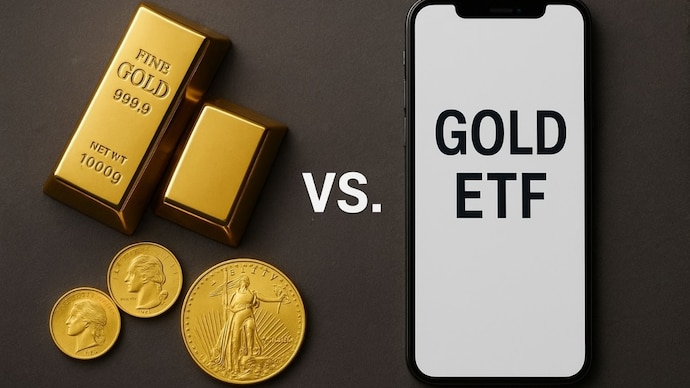
This announcement has created a stir among investors, especially those who prefer digital investments for convenience. Many people have started questioning whether their money in digital gold is really safe and what better alternatives they have.
Let’s understand what digital gold actually is, why SEBI is warning investors, and why Gold ETFs (Exchange Traded Funds) are considered a safer option.
What Is Digital Gold?
Digital gold allows investors to buy small quantities of gold online through mobile apps or websites. You can invest as little as ₹100, and the corresponding amount of gold is stored in a vault by the seller. This makes it easy for people to buy and sell gold without worrying about physical storage.
It became popular during the pandemic when people avoided going to jewellery stores. Platforms like PhonePe, Google Pay, and Paytm started offering digital gold investment options in partnership with gold providers like MMTC-PAMP, Augmont, and SafeGold.
However, despite its popularity, there’s a big problem — digital gold is not regulated by SEBI, RBI, or any other government body.
Why SEBI Is Warning Investors
SEBI has made it clear that digital gold is outside its regulatory purview. This means fintech companies offering digital gold are not registered or monitored by SEBI.
So, what’s the risk?
If a platform or seller fails, shuts down, or faces fraud issues, investors have no official protection. The gold supposedly stored for investors might be misused, or records could disappear without any government-backed safety net.
SEBI’s warning highlights that investors could lose their money because digital gold is not treated as a security, commodity, or financial instrument under existing laws. In simple words — it’s a grey area.
proclassifiedads.com | onestheater.com | iscbrm.org
my-lifeplus.net | hoopladigitall.com
Key Risks of Investing in Digital Gold
-
No Government Regulation:
Digital gold is not overseen by SEBI, RBI, or any government body. If something goes wrong, there’s no official channel to raise complaints. -
Counterparty Risk:
You depend entirely on the private company or platform storing your gold. If they go bankrupt, you may lose your investment. -
Storage Concerns:
While companies claim that your gold is stored in secure vaults, there is no independent verification. -
No Legal Guarantee:
You do not receive a physical gold certificate backed by law. You’re trusting a digital entry on a private server. -
Limited Transfer Options:
Digital gold cannot be used directly as collateral for loans or traded on exchanges.
These factors make it risky for long-term investors who think digital gold is just as safe as physical or paper gold.
What Are Gold ETFs?
Gold Exchange-Traded Funds (ETFs) are SEBI-regulated investment products that allow investors to buy gold in electronic form through the stock market.
Each Gold ETF unit represents a fixed amount of physical gold (usually 1 gram). When you invest in a Gold ETF, you are buying gold indirectly, but your investment is completely transparent, traceable, and regulated.
Gold ETFs can be traded like stocks on the NSE or BSE, and they are backed by physical gold stored in secure vaults under SEBI supervision.
Why Gold ETFs Are Safer
-
Regulated by SEBI:
Gold ETFs are fully regulated, which means the fund managers must follow strict rules on how they buy, store, and audit the gold. -
Backed by Physical Gold:
Every ETF is backed by real physical gold stored with custodians like banks and audited regularly. -
High Transparency:
You can track the performance, gold prices, and ETF holdings anytime. Everything is public and verified. -
No Storage Hassles:
You don’t need to worry about theft or purity issues since the gold is professionally managed. -
Liquidity and Easy Selling:
You can buy or sell Gold ETFs anytime during trading hours, just like shares. -
Tax Efficiency:
Long-term capital gains from Gold ETFs are taxed after 3 years, just like physical gold, but without the making charges or purity doubts.
Experts Speak
Financial experts have backed SEBI’s warning, urging investors to stay away from unregulated gold investments.
According to Ajay Kedia, market analyst,
“Digital gold may look attractive for small investors, but it lacks legal protection. Gold ETFs or sovereign gold bonds are better choices because they are regulated and transparent.”
Similarly, Navi Mutual Fund’s spokesperson mentioned,
“Gold ETFs combine the safety of gold with the transparency of stock market investments. For anyone looking to diversify, ETFs are far safer than buying gold through mobile apps.”
Difference Between Digital Gold and Gold ETF
| Feature | Digital Gold | Gold ETF |
|---|---|---|
| Regulation | Not regulated by SEBI or RBI | Regulated by SEBI |
| Storage | Vaults managed by private firms | Custodians approved by SEBI |
| Liquidity | Limited to platform | Can be sold on NSE/BSE |
| Risk | High (counterparty risk) | Low (backed by physical gold) |
| Minimum Investment | ₹1 | Price of 1 ETF unit (~₹50–₹100) |
| Transparency | Limited | Fully audited and public |
Other Safe Gold Investment Options
Besides Gold ETFs, SEBI and RBI also recommend Sovereign Gold Bonds (SGBs) as a safe alternative. These bonds are issued by the Reserve Bank of India and offer interest on top of gold price appreciation.
SGBs are considered one of the safest gold investment forms because they are backed by the government and offer tax benefits if held till maturity.
What Should Investors Do Now?
If you have already invested in digital gold, experts suggest you:
-
Check Your Seller’s Credibility:
Ensure your provider partners with recognized refineries like MMTC-PAMP. -
Consider Redeeming or Converting:
If possible, redeem your digital gold for physical delivery or shift to a Gold ETF. -
Diversify Safely:
Use regulated instruments like Gold ETFs, Gold Mutual Funds, or SGBs for safer long-term returns. -
Avoid Unverified Apps:
Don’t buy gold from apps or websites that are not registered with SEBI or RBI.
The Bottom Line
SEBI’s warning is a clear signal to investors to be cautious about where they put their money. Digital gold may seem convenient and modern, but convenience should not come at the cost of safety.
When you invest in Gold ETFs or Sovereign Gold Bonds, you not only get the benefit of gold price appreciation but also the assurance of regulatory protection and transparency.
In the world of investments, safety should always come first — and that’s exactly what SEBI wants investors to remember.