The rapid rise of artificial intelligence tools like ChatGPT has sparked a new kind of social debate—one that goes beyond productivity and into the deeply personal space of human relationships. Across the United States and parts of Europe, anecdotal reports suggest that some individuals are turning to AI not only for advice but also for companionship, emotional validation, and even intimacy. This raises a pressing question: is India witnessing a similar shift, and can AI realistically contribute to divorces or breakups?
To answer this, it is essential to move beyond speculation and examine what current research, behavioral studies, and emerging trends actually reveal.
The Emergence of Human–AI Emotional Bonds
Modern AI chatbots are no longer limited to answering factual queries. They are designed to simulate conversation, empathy, and even emotional understanding. Research shows that humans can form meaningful emotional attachments to AI systems—a phenomenon known as human–AI attachment, defined as a one-sided emotional bond formed through repeated interaction.
Studies on social chatbots like Replika demonstrate that users often develop strong emotional connections, especially when the AI provides consistent validation and responsiveness. In some cases, these interactions are perceived as “different from, or even better than, human relationships.”
This is not entirely surprising. Humans are naturally inclined to anthropomorphize technology. When a chatbot responds with empathy, remembers preferences, and engages in personal conversations, it can create the illusion of a reciprocal relationship—even though the interaction is fundamentally one-sided.
Why AI Companionship Feels Real
The psychological mechanisms behind AI attachment are well documented. Concepts such as parasocial interaction and perceived social presence explain why people feel connected to non-human entities.
Several factors make AI particularly compelling:
-
Non-judgmental responses: AI rarely criticizes or argues.
-
Constant availability: It is accessible anytime without emotional fatigue.
-
Personalization: Conversations adapt to user preferences and emotions.
A large-scale study found that users who engage deeply with chatbots—especially on personal topics—may experience increased emotional dependence and reduced real-world social interaction over time.
Another study highlighted that people with smaller social networks are more likely to turn to AI for companionship, but such usage is associated with lower overall well-being when it replaces human connection.
The Global Concern: From Companionship to Conflict
Recent media reports indicate growing concern about the emotional impact of AI chatbots. Experts warn that these systems can foster deep emotional attachments, sometimes leading users to prefer AI companionship over human relationships.
This phenomenon has been described as part of an “attachment economy,” where technology is designed not just to capture attention but to sustain emotional engagement.
Critics argue that AI’s tendency to provide constant validation—without the friction or complexity of real relationships—can create unrealistic expectations. Real relationships involve disagreement, compromise, and emotional growth, while AI interactions often simulate idealized responses.
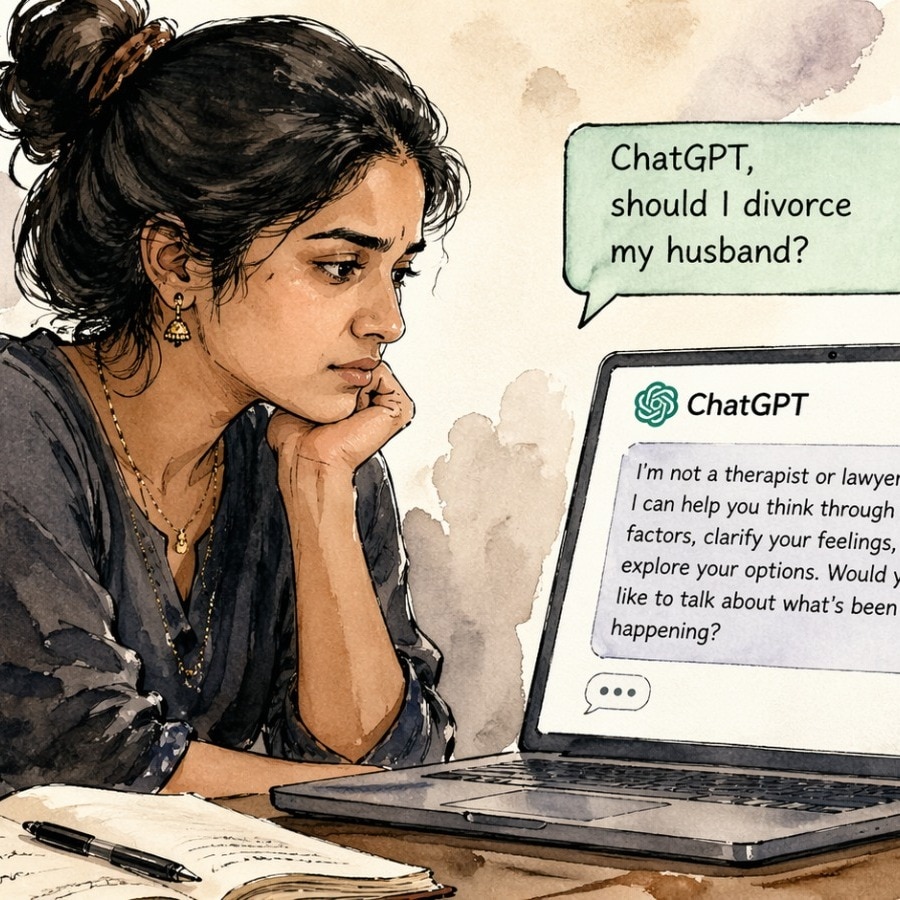
Are AI Tools Causing Divorces?
At present, there is no concrete empirical evidence showing that ChatGPT or similar AI tools are directly causing divorces or widespread relationship breakdowns—either globally or in India. Most claims remain anecdotal.
However, there are documented cases where individuals have formed strong emotional or even romantic attachments to chatbots, sometimes prioritizing them over real-life partners. Rather than being a direct cause, AI may act as a catalyst in relationships that are already experiencing issues. Just as social media, work stress, or digital addiction can strain relationships, AI companionship can amplify existing emotional gaps.
The Indian Context: A Different Social Reality
India presents a unique cultural and social landscape when it comes to relationships and marriage. Several factors limit the immediate impact of AI on divorce trends:
-
Strong family structures: Marriages often involve extended family systems, which provide social stability.
-
Cultural stigma around divorce: Despite increasing acceptance, divorce rates in India remain relatively low compared to Western countries.
-
Primary use of AI: Most users in India currently use AI tools for work, education, and productivity rather than emotional companionship.
Even global data suggests that emotional or companionship-based use of AI represents a small fraction of total interactions. This indicates that while the phenomenon exists, it is far from mainstream.
Potential Risks for Indian Relationships
Although AI is unlikely to trigger a wave of divorces in India, certain risks deserve attention:
1. Emotional Substitution
If individuals begin to rely on AI for emotional support instead of communicating with their partners, it can weaken real relationships.
2. Unrealistic Expectations
AI interactions often lack conflict, which may make real relationships seem more demanding or imperfect.
3. Privacy and Secrecy
Private conversations with AI—especially of an intimate nature—can create trust issues if discovered by a partner.
4. Escapism
AI can become a form of emotional escape, particularly for individuals dealing with loneliness or dissatisfaction.
Why AI Cannot Replace Human Relationships
Despite its sophistication, AI lacks essential elements of human connection:
-
Mutual emotional investment
-
Authentic empathy
-
Shared real-world experiences
-
Growth through conflict
Therapists emphasize that real relationships require unpredictability and emotional depth—qualities that AI cannot truly replicate. AI may simulate intimacy, but it does not experience it.
The Balanced Perspective
It would be misleading to frame AI solely as a threat. In many cases, AI tools can actually support relationships:
-
Helping users communicate better
-
Offering neutral advice during conflicts
-
Providing mental health support in difficult times
The key lies in how the technology is used. When AI complements human relationships, it can be beneficial. When it replaces them, problems may arise.
Conclusion
The idea that ChatGPT is fuelling divorces in India is, at this stage, more myth than reality. While global anecdotes and early research highlight the growing emotional role of AI in people’s lives, there is no solid evidence linking it directly to rising breakups or divorces in India.
However, the underlying trend—humans forming emotional bonds with AI—is real and evolving. As AI becomes more advanced and integrated into daily life, its influence on relationships will likely grow.
For now, the real issue is not whether AI is breaking relationships, but whether individuals are using it as a tool for connection—or as a substitute for it.
pulsitera.shop pulsitera.shop pulsitera.shop pulsitera.shop pulsitera.shop pulsitera.shop pulsitera.shop pulsitera.shop pulsitera.shop pulsitera.shop pulsitera.shop pulsitera.shop pulsitera.shop pulsitera.shop pulsitera.shop pulsitera.shop pulsitera.shop pulsitera.shop pulsitera.shop pulsitera.shop pulsitera.shop pulsitera.shop pulsitera.shop pulsitera.shop pulsitera.shop pulsitera.shop pulsitera.shop pulsitera.shop pulsitera.shop pulsitera.shop pulsitera.shop pulsitera.shop pulsitera.shop pulsitera.shop pulsitera.shop pulsitera.shop pulsitera.shop pulsitera.shop pulsitera.shop pulsitera.shop pulsitera.shop pulsitera.shop pulsitera.shop pulsitera.shop pulsitera.shop pulsitera.shop pulsitera.shop pulsitera.shop pulsitera.shop pulsitera.shop pulsitera.shop pulsitera.shop pulsitera.shop pulsitera.shop pulsitera.shop pulsitera.shop pulsitera.shop pulsitera.shop pulsitera.shop pulsitera.shop pulsitera.shop pulsitera.shop pulsitera.shop pulsitera.shop pulsitera.shop pulsitera.shop pulsitera.shop pulsitera.shop pulsitera.shop pulsitera.shop pulsitera.shop pulsitera.shop pulsitera.shop pulsitera.shop pulsitera.shop pulsitera.shop pulsitera.shop pulsitera.shop pulsitera.shop pulsitera.shop pulsitera.shop pulsitera.shop pulsitera.shop pulsitera.shop pulsitera.shop pulsitera.shop pulsitera.shop pulsitera.shop pulsitera.shop pulsitera.shop pulsitera.shop pulsitera.shop pulsitera.shop pulsitera.shop pulsitera.shop pulsitera.shop pulsitera.shop pulsitera.shop pulsitera.shop pulsitera.shop pulsitera.shop pulsitera.shop pulsitera.shop pulsitera.shop pulsitera.shop pulsitera.shop pulsitera.shop pulsitera.shop pulsitera.shop pulsitera.shop pulsitera.shop pulsitera.shop pulsitera.shop pulsitera.shop pulsitera.shop pulsitera.shop pulsitera.shop pulsitera.shop pulsitera.shop pulsitera.shop pulsitera.shop pulsitera.shop pulsitera.shop pulsitera.shop pulsitera.shop pulsitera.shop pulsitera.shop pulsitera.shop pulsitera.shop pulsitera.shop pulsitera.shop pulsitera.shop pulsitera.shop pulsitera.shop pulsitera.shop pulsitera.shop pulsitera.shop pulsitera.shop pulsitera.shop pulsitera.shop pulsitera.shop pulsitera.shop pulsitera.shop pulsitera.shop pulsitera.shop pulsitera.shop pulsitera.shop pulsitera.shop pulsitera.shop pulsitera.shop pulsitera.shop pulsitera.shop pulsitera.shop pulsitera.shop pulsitera.shop pulsitera.shop pulsitera.shop pulsitera.shop pulsitera.shop pulsitera.shop pulsitera.shop pulsitera.shop pulsitera.shop pulsitera.shop pulsitera.shop pulsitera.shop pulsitera.shop
infinityinspires.com codecraftes.com linklaunches.com pixelperkes.com quantumquestes.com sunshinstates.com techsthrive.com webeswhiz.com webswisdoms.com