Pakistan is reportedly preparing a major structural change in its defence framework, drawing lessons from its recent confrontation with India. The government, in close consultation with the military establishment, is moving to create a unified command system that will place the army, navy, and air force under a single, powerful authority — expected to be General Asim Munir, the current Chief of Army Staff (COAS).
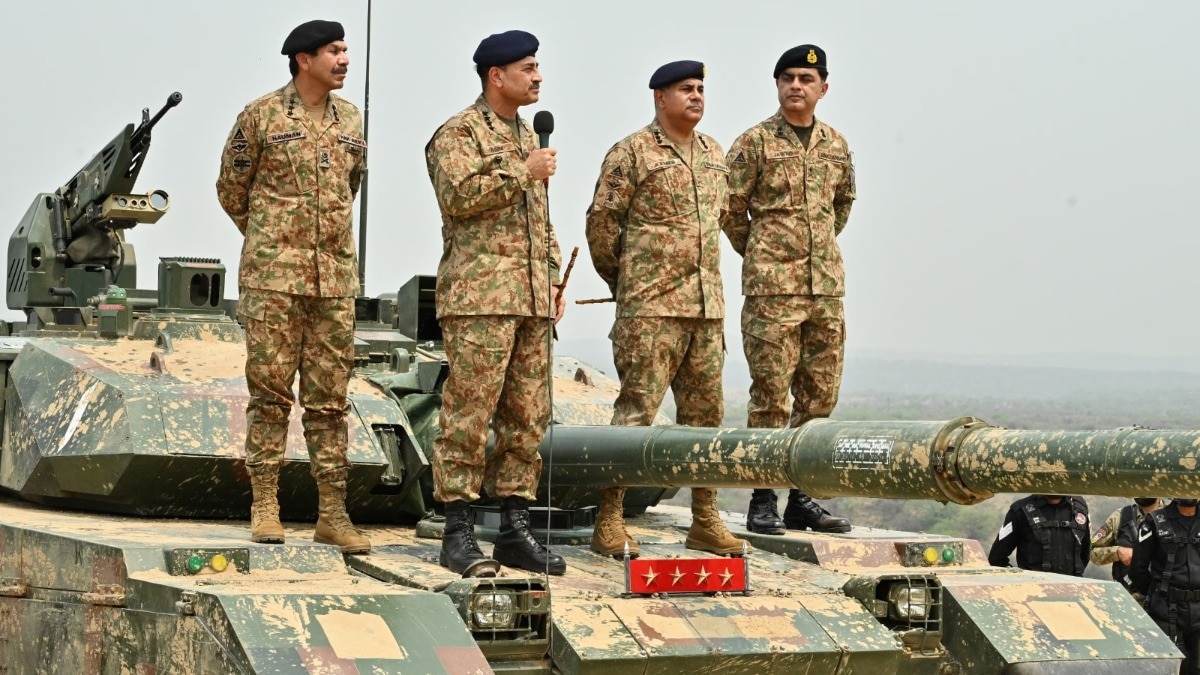
The proposal, which insiders say is now in its final stages of drafting, aims to improve coordination, enhance readiness, and streamline decision-making during conflicts. But behind the official narrative of “efficiency” and “strategic integration,” political observers see the move as yet another expansion of military power in Pakistan’s fragile democracy.
Background: India-Pakistan Tensions
The development comes only months after Pakistan’s brief but bruising confrontation with India. The skirmishes exposed several weaknesses in Pakistan’s command and control system — including slow inter-service coordination and conflicting chains of command.
Sources in Islamabad say that Prime Minister Shehbaz Sharif’s government was advised by defence experts to establish a unified structure similar to India’s Chief of Defence Staff (CDS) model, which ensures better joint operations between the three services.
The Pakistan military reportedly studied India’s reorganization of its military leadership following the 1999 Kargil War and the 2019 Balakot strikes. Both incidents had shown the value of unified leadership in high-stakes situations.
proclassifiedads.com | onestheater.com | iscbrm.org
my-lifeplus.net | hoopladigitall.com
The Proposed Unified Command
According to preliminary reports, the proposed “Unified Defence Command” would bring together the army, navy, and air force under one umbrella. The new command will likely have a single chief — tentatively titled “Chief of Defence Command” (CDC) or “Chairman Joint Chiefs of Staff Command (CJCSC)” with expanded powers.
Currently, Pakistan’s CJCSC serves as the senior-most military officer but has limited authority compared to the powerful army chief. Under the new system, the unified command leader would oversee all operational and strategic decisions during both wartime and peacetime, effectively becoming the supreme commander of Pakistan’s armed forces.
While the official announcement has not yet been made, insiders suggest General Asim Munir could be the first to hold this new role, given his close ties with the political leadership and his growing influence across government institutions.
Why General Asim Munir Stands to Gain
General Asim Munir, who took over as Pakistan’s army chief in 2022, has steadily consolidated his power over the country’s politics, economy, and security. The army in Pakistan has historically been the most powerful institution, often playing a decisive role in governance.
Munir’s tenure has already seen increased military oversight in economic decision-making, policing, and even foreign policy. With the new unified command, his position would be elevated even further — giving him direct operational control over the navy and air force, something no Pakistani army chief has previously enjoyed.
Political analysts suggest that the new structure could tilt Pakistan further toward a military-dominated system, weakening the role of the civilian government. The creation of such a post may also set the stage for long-term institutional dominance by the army, making it nearly impossible for elected leaders to challenge military authority in the future.
Civil-Military Balance at Stake
For decades, Pakistan’s politics have been shaped by its powerful military establishment. Civilian governments have often struggled to assert control over defence policy or security affairs.
This move, critics argue, will formalize the imbalance. “The unified command is not about efficiency — it’s about consolidating control,” said a former defence analyst based in Karachi. “It’s a lesson learned from India, but the spirit is different. India created the CDS to strengthen civilian oversight. Pakistan is doing the opposite.”
However, supporters of the proposal defend it as a necessary reform to keep Pakistan’s defences modern and coordinated. They argue that in the age of hybrid warfare, cyber threats, and advanced missile systems, Pakistan cannot afford bureaucratic delays between its armed forces.
Regional Implications
India, which has closely monitored developments across its western border, is expected to assess the unified command’s potential impact carefully.
Defence experts in New Delhi note that while Pakistan’s structural reforms may improve its internal coordination, they are unlikely to alter the overall balance of power in South Asia. India’s military modernization and strategic partnerships with Western nations give it a significant edge in technology and training.
China, Pakistan’s closest defence ally, has reportedly welcomed the move. Beijing is known for its centralized military command structure, which allows seamless coordination among its army, navy, and air force under the Central Military Commission. Observers believe China may have advised Pakistan on its reform model during recent high-level military exchanges.
Public and Political Reaction
Within Pakistan, the reaction has been mixed. Some see it as a step toward greater military efficiency and readiness, while others view it as a political power grab.
Opposition leaders, particularly from the Pakistan Tehreek-e-Insaf (PTI) party, have criticized the move as unconstitutional, warning that it further undermines democracy. They argue that such sweeping changes should come only after a full parliamentary debate, not through backdoor consultations.
On social media, the topic has sparked debate. Many users pointed out that while the military continues to expand its influence, ordinary citizens struggle with inflation, unemployment, and political instability. The hashtag #UnifiedCommand trended briefly on X (formerly Twitter), with users sharing both patriotic and critical takes.
Looking Ahead
If approved, Pakistan’s unified command structure could be announced in the coming months, possibly as part of a larger defence reform bill. Implementation would likely take a few years, involving new protocols, training modules, and inter-service coordination drills.
For now, all eyes are on General Asim Munir. His growing authority and the civilian government’s cooperation signal a new era in Pakistan’s civil-military relations — one where the military’s power is not just implied but institutionalized.
Whether this will strengthen Pakistan’s security or deepen its democratic crisis remains to be seen. What is certain, however, is that Pakistan’s military landscape is on the verge of its biggest transformation since its creation in 1947.